
Police Searches

Know Your Rights: A Comprehensive FAQ Guide to Police Search Powers and the Law
When you are confronted by the police, the power dynamic is heavily skewed. Many people choose to comply with intrusive requests out of fear of making their situation worse.

However, knowing your rights is not about being difficult; it is about protecting your civil liberties. In a landmark report investigating the misuse of warrantless search powers by South Australia Police (SAPOL), the SA Acting Ombudsman warned that if police search powers “are not carefully monitored, the danger is that the erosion of civil liberty will gradually occur over a period of time.”
At Websters Lawyers, we have successfully represented numerous clients in cases against the State involving unlawful conduct by police. Our team of criminal lawyers includes former prosecutors who possess unique, firsthand insight into the way police operate, the protocols they must follow, and the mistakes they commonly make. This definitive guide answers the most critical questions regarding police search powers in South Australia and explains how we challenge unlawfully obtained evidence in court.
1. When Can Police Lawfully Search You or Your Property?
In South Australia, police do not have an unrestricted right to search whoever they please. Generally, police must rely on one of three legal foundations to conduct a search:
- Your Consent: You have voluntarily agreed to let them search you or your property. (Note: We strongly advise against voluntarily consenting).
- A Search Warrant: They possess a formal warrant issued by a court or under specific legislation authorizing entry and search.
- Statutory Warrantless Powers: They suspect on “reasonable grounds” that you possess illicit items or evidence under specific legislative provisions.
The two primary pieces of legislation governing standard warrantless street and roadside searches are:
- The Summary Offences Act 1953 (Section 68): This gives police the power to search a person, vehicle, or vessel if they reasonably suspect it contains stolen goods, weapons, drugs, or evidence of a serious (indictable) offence.
- The Controlled Substances Act 1984 (Section 52): This specifically authorizes police to search any person or vehicle if they reasonably suspect they possess illicit drugs or drug-related equipment.
2. What Exactly Qualifies as “Reasonable Suspicion”?
The law does not allow police to search you based on a “hunch” or mere curiosity. A lawful warrantless search must be backed by “suspicion on reasonable grounds.” Legally, our experience shows this requires:
- More than a hunch: It requires a rational conclusion based on objective, supporting facts.
- An objective test: The facts must be strong enough that any reasonable person standing in the police officer’s shoes would form the same suspicion.
- A positive apprehension: Courts describe “suspicion” as a working hypothesis backed by actual evidence, not idle wondering or speculation.
If a police officer cannot point to objective, recorded facts that existed before the search took place, the search is unlawful.
3. When Have SAPOL Searches Been Judged Unlawful in Real Cases?
Our legal team routinely dissects police evidence to find where boundaries were crossed. Here are six real-world examples in South Australia where courts ruled searches were unlawful and threw out the prosecution’s evidence:
- Is sitting in a car near a “drug house” enough? In one prominent matter, police searched a car parked near a suspected drug property because the driver allegedly looked nervous. The District Court threw out the found drugs and cash, ruling that a vague feeling that “something strange is going on” is not a legal substitute for objective reasonable suspicion.
- Can police search me if I refuse to say “hello”? Uniformed police attempted to search a woman playing a gaming machine on Hindley Street simply because she ignored their casual conversation and appeared “fidgety.” The Court ruled the search unlawful, confirming that citizens have every right to refuse to engage with police without it being deemed suspicious.
- Can police search your car because you appear nervous or sweaty? In R v Ayres [2026] SADC 84, police searched two vehicles after claiming the occupants appeared nervous, evasive, and were sweating. The District Court excluded all drug evidence found, confirming that minor behavioral eccentricities, sweating, or nervousness near police do not automatically establish a reasonable suspicion—especially when unbacked by body-worn video. [Read our full analysis of the R v Ayres decision here.]

- Can a police search be based on an unrecorded “hunch” inside a rental car? In a case involving a woman in a rental car, an officer claimed to see drug paraphernalia in the console. The District Court ruled the search unlawful because there was no mention of these items in the officer’s notes, they weren’t visible on camera, and the poor lighting made the claim highly improbable.
- What are the limits of entry for a specific purpose? Police were refused a drug search warrant for a property, so they instead used a routine firearms audit warrant to gain entry. Once inside, they overstepped the boundaries of the firearms audit to search for drugs anyway. The court ruled the search unlawful, penalizing the police for executing their powers in bad faith.
- Can police detain pedestrians just to force questioning? Police ordered a man walking down a residential street to stop and answer questions. When he exercised his right to silence, they searched him and his vehicle. The court ruled the man was unlawfully detained and the subsequent warrantless search was completely invalid.
- Can a search be justified by database history and minor nervousness at a breath test? A driver stopped for an RBT on the Sturt Highway near Truro returned a clean sample, but police performed an operational database check revealing past cautions. Combining this history with the driver’s standard nervousness and GPS usage, the officer searched the vehicle. The District Court excluded the resulting drug evidence, confirming that minor behavioral eccentricities and historic logs do not create immediate reasonable suspicion.
4. What Types of Search Warrants Can Police Execute Under State Law?
When police are not acting on a warrantless “reasonable suspicion,” they must hold a valid statutory warrant. Under South Australian legislation, these powers are strictly defined:
- General Search Warrants (Section 67 Summary Offences Act 1953): Granted to individual, senior police officers for up to six months. It gives that specific officer the power to enter properties, break open doors, and search homes if they suspect an indictable offence has been or is about to be committed.
- Drug Seizure and Property Warrants (Sections 50 & 52 Controlled Substances Act 1984): Section 50 establishes the appointment of authorised officers. Under Section 52(1), a magistrate can issue a specific warrant authorising police to enter and search a designated property if there are reasonable grounds to trust that illicit drugs, manufacturing equipment, or drug documents are present.
- Seizure of Criminal Assets (Sections 172–177 Criminal Assets Confiscation Act 2005): These provisions allow a magistrate to issue specific asset-seizure warrants. Police can enter premises or search vehicles to locate and seize “tainted property” or property liable to forfeiture under proceeds-of-crime laws.
- Cross-Border Investigations (Criminal Investigation (Extraterritorial Offences) Act 1984): This allows SA magistrates to issue warrants authorising local police to search properties and seize evidence related to serious crimes committed outside South Australia, or crimes that cross state borders.
- State Surveillance Operations (Surveillance Devices Act 2016): Authorises the issuance of highly restricted warrants allowing police to secretly enter premises or vehicles to install, maintain, or retrieve covert audio, visual, or tracking surveillance equipment.
5. What Search Warrants Can Police Execute Under Commonwealth (Federal) Law?
If you are suspected of committing a federal crime—such as importing border-controlled drugs, tax fraud, or federal weapon offences—police can execute warrants backed by Commonwealth legislation:
- Federal General Search Warrants (Section 3E Crimes Act 1914 (Cth)): This is the primary mechanism federal law enforcement (such as the Australian Federal Police) uses to secure warrants from a magistrate or judge. It grants explicit powers to enter premises, containers, or vehicles to search for and seize evidential material relating to Commonwealth offences.
- Federal Surveillance Operations (Surveillance Devices Act 2004 (Cth)): Similar to the state framework, this federal Act empowers judges or administrative members to issue warrants allowing law enforcement to enter properties or intercept vehicles to deploy covert surveillance devices across Australia during federal investigations.
6. What Warrantless Police Search Powers Exist Under the Summary Offences Act?
Beyond standard roadside drug stops, the Summary Offences Act 1953 grants police several targeted warrantless search powers, which include:
- Section 21L (Power to search for prohibited weapons): A police officer may stop, detain, and search any person or vehicle if they reasonably suspect the person is carrying a prohibited weapon (such as a flick knife, dagger, or knuckle duster).
- Section 68A (Searching land for stolen vehicles): Police have the power to enter and search land (but not a dwelling house) if they reasonably suspect a stolen vehicle, or a vehicle used unlawfully, is located on that property.
- Section 70 (Power to stop and search vessels): Police have broad powers to board, stop, and search any vessel (boats or ships) in South Australian coastal waters or harbors if they suspect an offence has been, or is about to be, committed.
7. What Powers Do Police Have in a “Declared Public Precinct“?
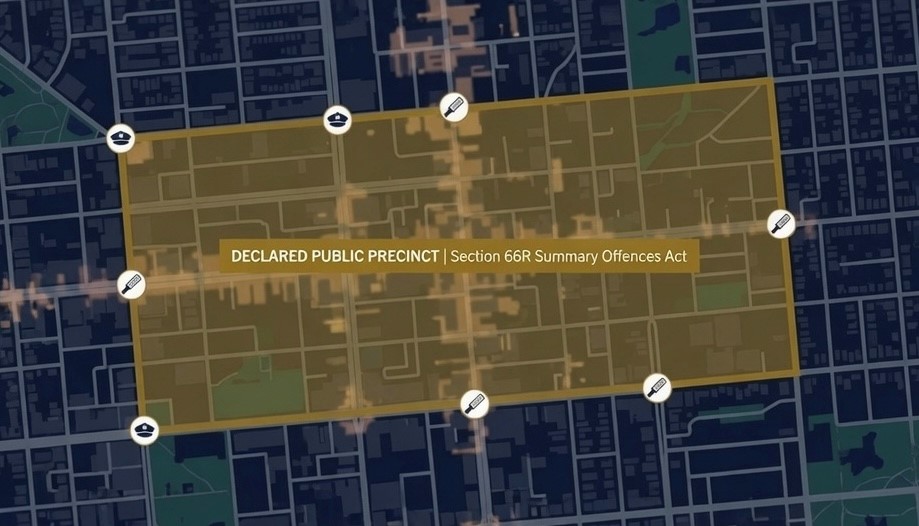
The Attorney-General can declare specific entertainment or nightlife districts (such as the Hindley Street precinct or major festival zones) to be Declared Public Precincts (DPPs). Within these boundaries during designated times, standard “reasonable suspicion” protections are modified, but police must still strictly adhere to a multi-step statutory process:
- Metal Detector Searches First (Section 66ZA & 66ZB): Police are empowered to conduct a non-intrusive metal detector search (wanding) of any person or their bags. They cannot immediately jump to an intrusive physical pat-down search.
- Further Physical Searches: A police officer can only conduct a more intrusive physical search if the metal detector alarms, if the person refuses to comply with the wanding, or if separate independent grounds for reasonable suspicion exist.
- Section 66Y (Powers to prevent serious violence): If a senior police officer reasonably believes an incident of serious violence is likely to occur in a public place, they can authorize special weapon search powers for up to 24 hours.
8. Can Police Use Drug Dogs and “Detection Aids” Legally?
Yes. Under Section 74BAAB of the Summary Offences Act, police are legally permitted to use “detection aids”—most commonly trained drug-detection dogs—in public places, public transport routes, and licensed venues.
If a drug dog gives a positive indication (such as sitting next to a person), that interaction legally provides the police officer with the “reasonable suspicion” required to bypass a warrant and conduct a full physical search under the Controlled Substances Act.
9. What Searches Apply Post-Arrest, in Custody, or for Domestic Violence?
Search powers expand significantly once an individual is taken into custody or when police are responding to specific safety risks:
- Section 81 SOA (Searches of persons in lawful custody): If you are formally arrested, police have broad powers to search you to ensure you are not carrying weapons, items to facilitate an escape, or crime evidence. This section also governs the strict legal authorizations required if police intend to conduct an intrusive strip search.
- Section 57 of the Firearms Act 2015: Police possess exceptionally wide powers regarding firearms. An officer can, without a warrant, stop, detain, and search any person, vehicle, or premises if they suspect a firearm offence is being committed, or if they need to check compliance with firearm storage, registration, and licensing laws.
- Section 37 of the Intervention Orders (Prevention of Abuse) Act 2009: If an Intervention Order requires a defendant to surrender weapons, Section 37 gives police explicit powers to enter and search any premises or vehicle where the defendant lives or is suspected to be, specifically to locate and seize those restricted items.
- The Criminal Law (Forensic Procedures) Act 2007: This Act strictly governs how police can search a person’s body for forensic evidence (such as DNA swabs, blood samples, or fingerprints). Except for basic identity procedures post-arrest, police generally require either your informed written consent, a senior police officer’s authorization, or a formal court order to compel you to undergo forensic sampling.
10. How Can I Protect Myself and Secure the Evidence During a Search?
If police state they are going to search you, your vehicle, or your property, your actions in those moments are critical to your future legal defense.
🚨 Critical Warning: Avoid Confrontation on the Street
Physically resisting or blocking an officer can result in immediate charges of hindering police or assaulting police. Depending upon the evidence, those charges can potentially stand in court even if the initial search is later proven to be unwarranted. Even if the actions of the police are entirely unlawful and you believe you have a lawful basis to resist, in most cases that is an argument better saved for the courtroom rather than finding yourself arrested and in the police cells.
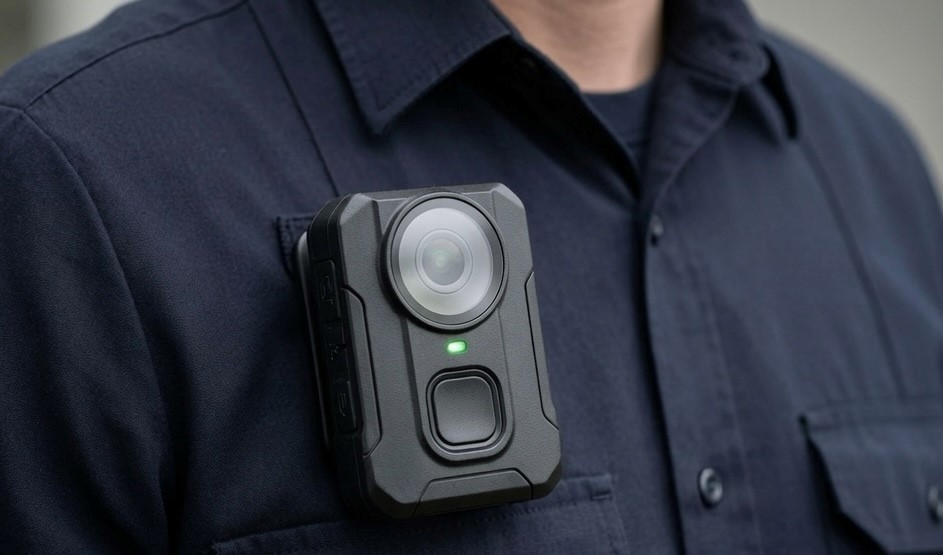
1. Secure the Evidence: Demand Body-Worn Video
Modern SAPOL officers carry Body-Worn Video (BWV) cameras. During an interaction, you should state clearly to ensure it is recorded on audio:
“Is your body-worn camera activated?”
“I want you to activate your body-worn camera!”
If an officer fabricates a reason for a search after the fact, the lack of body-worn footage or contradictions on the tape can destroy the prosecution’s case.
2. State Your Objection Clearly
To prevent the police from arguing in court that you voluntarily permitted the search, state clearly and calmly:
“I do not consent to this search, but I will not physically hinder you.”
3. Exercise Your Right to Silence
In South Australia, you are legally required to provide your name, address, and date of birth if suspected of an offence. Beyond these basic identity requirements, you do not have to answer any questions. If police begin interrogating you during a search, simply state:
“I am exercising my right to silence and I wish to speak to my lawyer at Websters Lawyers.”
Do You Have to Give Police Your Phone PIN?
If police seize your mobile phone, having possession of the device does not automatically mean you are required to hand over your PIN or unlock code. You ordinarily retain the right to refuse under your right to silence.
Frthermore, police cannot undermine this right by suggesting that refusal is pointless or that they will simply unlock it anyway. In R v Ayres [2026], the District Court excluded incriminating phone messages because officers led the accused to believe he had no genuine choice but to provide his PIN.
Learn more about your rights regarding police requests for your phone PIN.
11. What Happens if the Police Conducted an Unlawful Search?
If Websters Lawyers establishes that SAPOL conducted an illegal or unauthorized search, the evidence they found is not automatically thrown out. Instead, our defense team invokes a powerful legal mechanism known as the Bunning v Cross discretion.
The judge must weigh the public interest in catching criminals against the public interest in protecting citizens from unlawful police conduct. If our team can demonstrate that the police acted in bad faith, deliberately overstepped their statutory limits, or acted out of reckless disregard for the law, the court will routinely exclude the evidence. When the evidence is excluded, the prosecution’s case frequently collapses, leading to all charges being entirely dismissed.
Our firm has directly analyzed multiple instances where justice was served by holding police to account. You can explore how these specific challenges play out by reviewing our full breakdowns of successful case outcomes:
- Strange Behaviour Not Enough for an Unlawful Police Search
- Can Police Search Me If I Don’t Say Hello?
- Court Finds Unlawful Search by Police
- Limits of General Search Powers
- Warrantless Stop and Searches
- Can Police Search Your Car Without a Warrant?
- Do You Have to Give Police Your Phone PIN?
- Are Sweating and Nervousness Grounds for a Warrantless Search? (R v Ayres)
Facing Police Charges? Contact Websters Lawyers Today
The laws surrounding search, seizure, warrants, and forensic procedures are highly complex and turn entirely on the specific facts of your interaction. If you have been charged following a police search, do not assume your case is indefensible.
Our experienced team of criminal defense specialists—backed by the unique operational insights of our former prosecutors—will thoroughly dissect the police officer’s notebook, examine the body-worn video, and aggressively protect your rights.
Contact Websters Lawyers today to book your free first interview.