

Can Police Search Your Car Without a Warrant?
July 20, 2026
Most people assume that if police search a car and find evidence of an offence, the case is over.
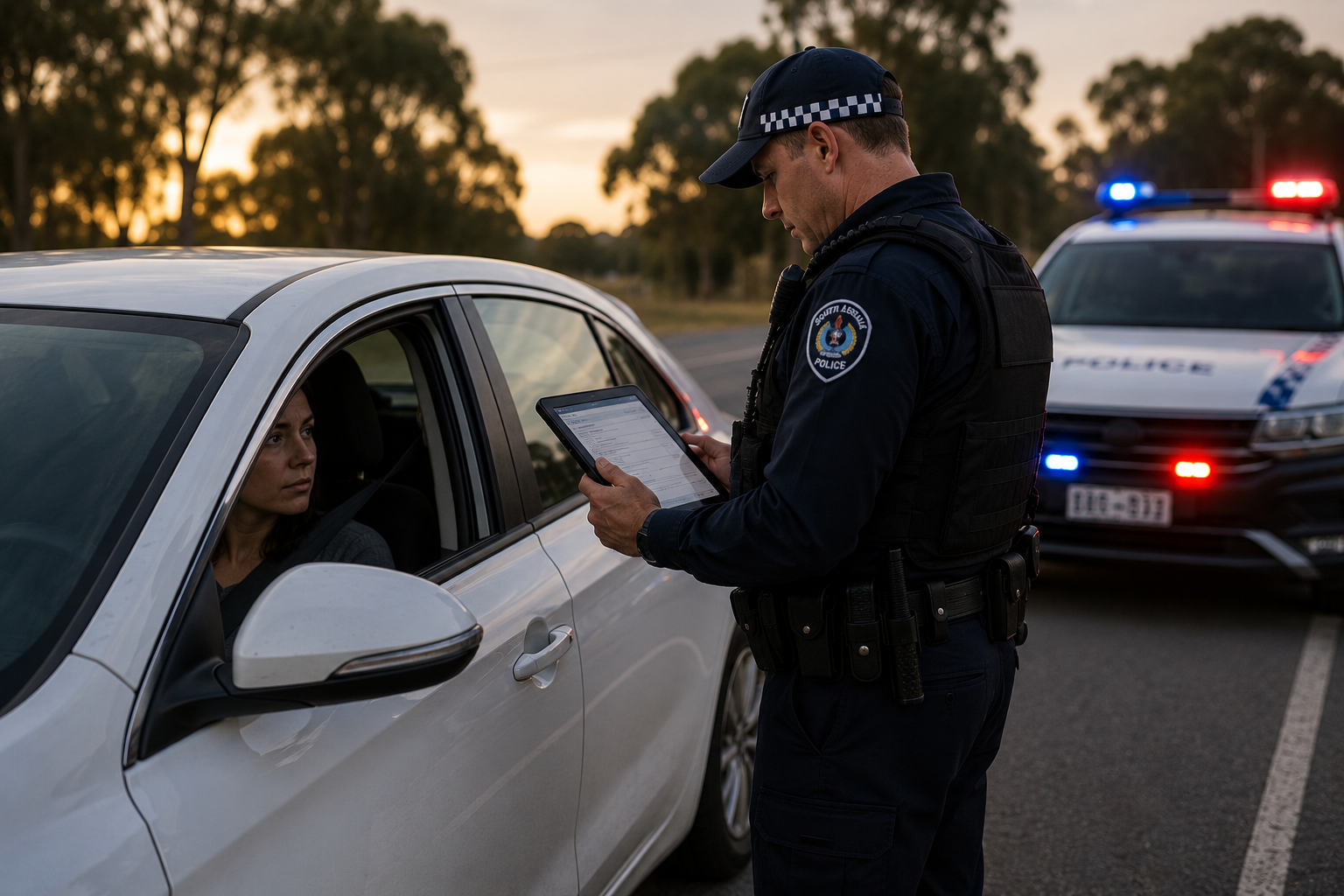
However, a recent decision of the District Court of South Australia demonstrates why it is not quite that simple. What began as an ordinary random breath test on the Sturt Highway quickly escalated into a warrantless search of a vehicle, the discovery of evidence of serious criminal offending and a prosecution before the District Court. Yet the Court ultimately ruled that the search was unlawful and excluded the evidence obtained as a result.
There are strict legal requirements governing when police may search a vehicle without a warrant. Those safeguards are not mere technicalities. They were enacted by Parliament to ensure that significant police powers are exercised only in the circumstances authorised by law, protecting the rights and freedoms of every member of the community while allowing police to investigate criminal offending effectively.
The decision provides an important insight into how courts assess police searches—and why the legality of the search itself can sometimes become one of the most important issues in a criminal case.
Can Police Search My Car Without a Warrant?
Yes—but only in circumstances authorised by law.
South Australian police have a number of statutory powers to search vehicles without first obtaining a warrant. Those powers play an important role in investigating crime and protecting the community. However, they are not unlimited.
Before police can exercise many warrantless search powers, the law requires that certain legal requirements be satisfied. Whether those requirements exist depends upon the particular legislation being relied upon and the facts known to police before the search begins. As the recent decision demonstrates, courts carefully examine whether those legal requirements were met.
What Is ‘Reasonable Suspicion’?
One of the most important issues considered by the Court was the concept of reasonable suspicion.
Police cannot search a vehicle simply because something ‘doesn’t feel right’. Nor can a search be based upon curiosity, speculation or a hunch. Instead, the law says that if a police officer wants to search a car without a warrant then that officer must reasonably suspect that evidence of an offence under the Controlled Substances Act was in the vehicle before exercising the power to search.
The Court referred to earlier authority explaining that there must be a rational connection between the available information and the suspicion formed by the officer. Mere speculation or ‘idle wondering’ is not enough. That distinction may sound technical, but it lies at the heart of the statutory safeguards Parliament has placed on police search powers.
What Happened in the Recent Case?
The case began shortly after midnight when police stopped a vehicle on the Sturt Highway near Truro for a routine random breath test.
The driver produced her licence, voluntarily provided a breath sample which returned a negative result, and routine licence checks revealed nothing suspicious. What happened next became the focus of the Court’s decision.
The police officer then conducted further enquiries using SHIELD, South Australia Police’s operational records management system used to record and manage matters such as crime reports, apprehensions and custody information. Those enquiries revealed that the driver had previously received two drug-related cautions, one of which related to drug paraphernalia several years earlier.
The officer also relied on a combination of observations made during the traffic stop. These included the late hour of the journey, the explanation that the occupants were travelling to the Riverland to use jet skis, the driver’s apparent nervousness, the fact she could not identify the registered owner of the vehicle, her use of GPS navigation and his observations of the passenger’s behaviour. The officer considered that, taken together with the information obtained from SHIELD, these matters justified searching the vehicle without first obtaining a warrant.
During that search, police located drugs and other items which ultimately resulted in the driver being charged with drug trafficking. The issue before the Court, however, was not whether those items had been found. It was whether police had been lawfully entitled to search the vehicle in the first place.
Why Did the Court Find the Search Was Unlawful?
The Court identified two significant problems.
First, the officer applied the wrong legal test. When giving evidence, he explained that his suspicion was that there ‘may be’ controlled substances or related items in the vehicle. The legislation required the officer to reasonably suspect that evidence of an offence was in the vehicle. The Court concluded that suspecting there may be drugs fell short of the statutory threshold and amounted to something closer to speculation than the legally required state of mind.
Secondly, the Court concluded that the available facts did not amount to reasonable suspicion. It carefully examined every circumstance relied upon by the officer, including the late-night journey, the driver’s apparent nervousness, the fact she was driving someone else’s vehicle, her use of GPS navigation and the previous drug cautions revealed during the SHIELD enquiry. While some of those matters may have appeared unusual, the judge observed that eccentricities should not too quickly be associated with illegality and concluded that, viewed collectively, they did not amount to the reasonable suspicion required by the legislation.
Does Finding Evidence Automatically Make the Search Lawful?
No. The Court must first determine whether police exercised their search powers lawfully. Only then does it consider whether the evidence obtained during that search should be admitted. In this case, after finding the search unlawful, the Court exercised its discretion to exclude the evidence obtained as a result.
Why Would a Court Exclude Reliable Evidence?
Parliament has deliberately imposed limits on police search powers because those powers interfere with fundamental rights and freedoms. If courts routinely admitted evidence obtained through unlawful searches, those statutory protections could become meaningless. The Court explained that maintaining public confidence in the administration of justice sometimes requires unlawfully obtained evidence to be excluded.
Can Police Search My Car Because I Have Previous Drug Offences?
Not necessarily. The recent decision demonstrates that previous drug cautions or criminal history do not automatically justify a warrantless search. Every case depends upon its own facts.
In this case, the Court carefully considered the driver’s previous drug cautions but concluded that, given their age and the limited information available, they did not provide a reasonable basis to suspect that evidence of a drug offence would be found in the vehicle on that occasion. Previous police interactions may sometimes be relevant, but they do not automatically justify a warrantless search.
Can Police Search My Car Because I’m Nervous?
Again, not necessarily.
Many people become nervous when stopped by police, even when they have done nothing wrong. A traffic stop can be stressful, particularly late at night or when confronted by flashing lights and questioning.
In the recent case, the officer gave evidence that the driver appeared unusually nervous, was softly spoken and avoided eye contact. He also relied upon his observations of the passenger, whom he believed appeared fidgety and possibly affected by some form of substance. Those matters formed part of the overall basis for his decision to search the vehicle.
The Court accepted that the officer had genuinely made those observations. However, it concluded that, whether considered individually or together with the other surrounding circumstances, they still fell short of establishing the reasonable suspicion required by the legislation. Nervousness may sometimes form part of the overall picture, but it does not automatically justify a warrantless search.
Can Police Search My Car After a Random Breath Test?
A random breath test does not automatically give police the right to search your vehicle. Whether police may conduct a warrantless search depends upon whether the legal requirements for the particular search power have been satisfied. As this recent decision demonstrates, those requirements are carefully scrutinised by the courts.
What Should I Do If Police Search My Vehicle?
If police search your vehicle and you are later charged with an offence, one of the first questions an experienced criminal lawyer should ask is: Was the search lawful? That requires careful consideration of what police knew before the search, what power they relied upon and whether the statutory requirements had been satisfied.
Don’t Assume the Search Was Lawful
If there is one lesson to take from this recent decision, it is this: do not assume that because police found evidence, the search was lawful. The District Court carefully examined every step taken by the police officer before concluding that the statutory limits on the search power had not been satisfied. Those safeguards exist to protect both the community and the integrity of the criminal justice system.
We Can Help
At Websters Lawyers, we have successfully represented people charged with criminal offences for many years. Where a prosecution follows a police search, we carefully examine not only what police found, but how they found it. The legality of a search can sometimes become one of the most significant issues in a criminal case.
If you have been charged following a police search of your vehicle, contact Websters Lawyers for a confidential discussion about your legal rights and the options available in your particular circumstances.