

Can AI Replace Your Lawyer?
August 7, 2026
Artificial intelligence is changing the way Australians seek legal advice.
Every day, people ask AI to explain their legal rights, draft letters, prepare court documents and even advise them how to conduct their own legal cases. Sometimes the answers are excellent. Sometimes they are dangerously wrong.
That issue was highlighted in a recent decision of the Supreme Court of Tasmania.
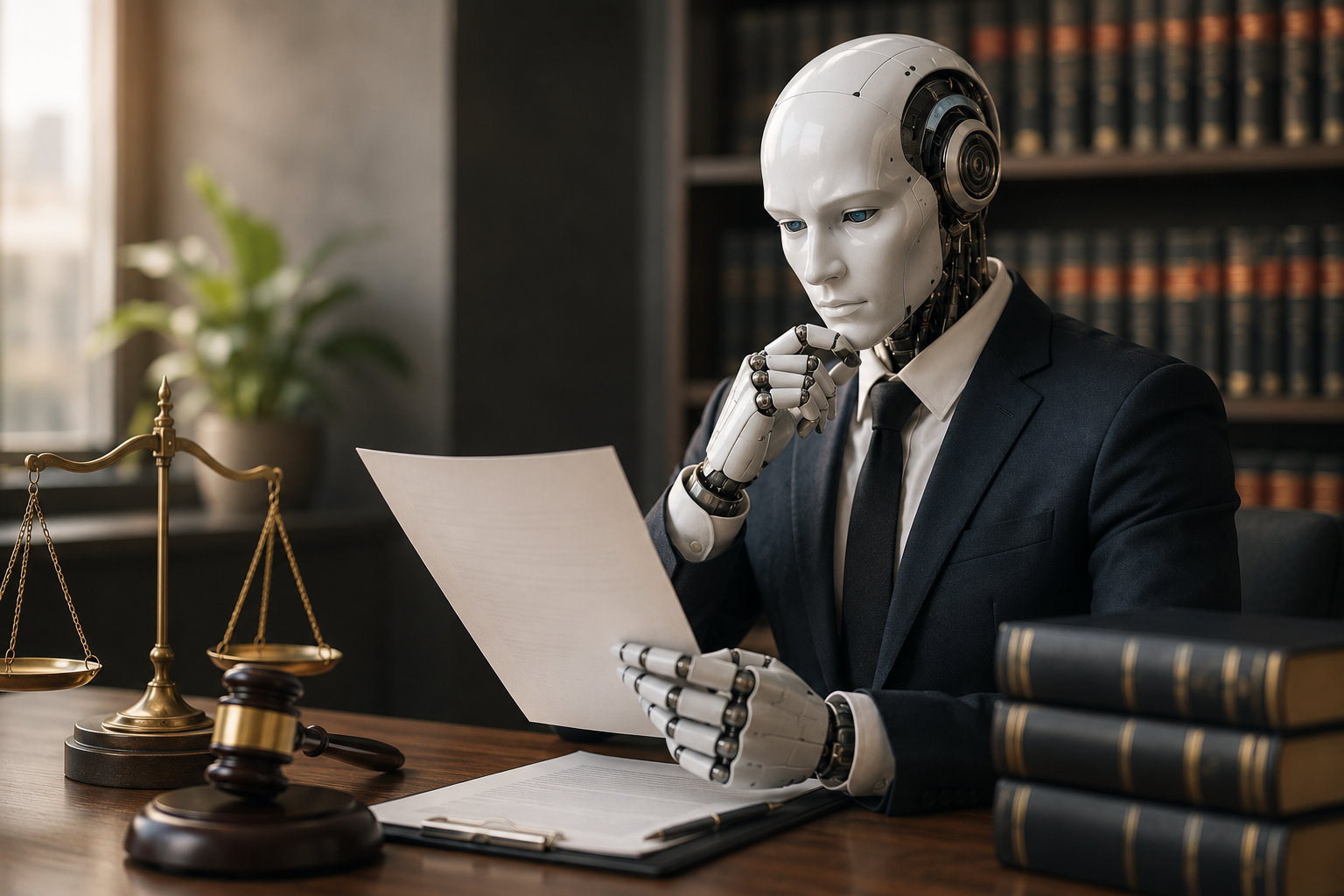
A self-represented litigant sought to overturn almost $4,000 in court costs after relying upon legal submissions generated by artificial intelligence. Unfortunately, one of the legal authorities relied upon simply did not exist. It had been “hallucinated” by AI.
The problem isn’t that artificial intelligence occasionally makes mistakes.
The problem is that, without legal training, most people have no way of knowing when it has.
In the recent case, the Court accepted the litigant’s apology but warned that relying upon fictitious AI-generated authorities has “the potential to mislead the Court”. It went further, stating:
“It is unacceptable that any litigant, whether represented or not, rely upon such so-called legal authorities for an argument before the Court.”
The Court also observed:
“It is not acceptable for artificial intelligence to be used by litigants unless the product of that use is independently and thoroughly verified.”
The decision is an important reminder that while AI is an extraordinary source of information, it is not a substitute for professional legal advice.
Can AI Give Me Legal Advice?
Artificial intelligence is remarkably good at explaining legal concepts.
It can summarise legislation, explain legal terminology in plain English and help people understand the issues they are facing. It can also assist with drafting letters, preparing questions and organising information.
For many people, it is an excellent starting point.
The difficulty is that legal problems are rarely solved simply by knowing what the law says.
Every legal dispute turns on its own facts. A seemingly insignificant detail can completely change the outcome of a case. The credibility of a witness, the wording of a contract, the timing of an event or a strategic decision made early in a matter may prove decisive.
Legal advice is not simply about identifying legal principles.
It is about applying those principles to your particular circumstances.
Is AI Always Correct?
No.
Like any technology, artificial intelligence makes mistakes.
Sometimes it cites legislation that has been amended. Sometimes it misunderstands the facts it has been given. Occasionally it produces legal authorities that simply do not exist.
Lawyers refer to these as “hallucinations”.
The Tasmanian case is an example.
The applicant’s submissions relied upon a fictitious authority generated by AI. Considerable time was spent by the Court attempting to locate the case before it became apparent that it had never existed.
That illustrates the real problem.
The danger of relying on AI alone is that a lawyer knows how to verify authorities, identify inconsistencies and recognise when something simply does not look right.
Most members of the public do not.
If Lawyers Can Get Caught Out, What Chance Does Everyone Else Have?
The Tasmanian case involved a self-represented litigant, but it is far from unique.
Courts in Australia and overseas have criticised lawyers who have relied upon AI-generated cases and legal authorities that never existed. Some have faced adverse costs orders, while others have been referred to professional regulators after filing inaccurate AI-generated material.
These cases are not evidence that artificial intelligence has no place in the legal profession.
Quite the opposite.
They demonstrate that AI is a powerful tool—but only when used by someone who understands both its capabilities and its limitations.
If trained lawyers can occasionally be misled by AI, it is hardly surprising that members of the public may also struggle to identify when its answers are inaccurate.
Will Using AI Save Me Money?
Many people assume that using AI before seeing a lawyer will reduce their legal costs.
Sometimes it can.
Often, however, the opposite occurs.
Lawyers are increasingly receiving lengthy AI-generated emails, extensive chronologies, repetitive submissions and pages of suggested legal arguments from clients who are genuinely trying to assist with their own cases.
Every page still needs to be read.
Every legal proposition still needs to be checked.
Every authority still needs to be verified.
If the material contains inaccuracies, repetition or irrelevant arguments, your lawyer must first separate the useful information from the misleading information before progressing your matter.
Ironically, what was intended to save money can sometimes increase legal costs.
A concise explanation of the facts from the client is often considerably more valuable than dozens of pages of AI-generated material.
Why Can’t AI Replace an Experienced Lawyer?
Very few legal cases are won because someone managed to find the right legislation.
Most are won because the right strategic decisions were made.
Should proceedings be commenced?
Should you negotiate?
Should you accept the offer?
Should you call that witness?
Should you answer that allegation?
What evidence will actually persuade the Court?
These are questions that cannot be answered simply by generating more words.
They require judgment.
They require experience.
They require an understanding of people, risk and strategy.
Most importantly, they require accountability.
If AI gives poor advice, nobody is responsible for the consequences.
A solicitor, however, owes professional duties to the client, must comply with ethical obligations and is accountable for the advice they provide.
That accountability is fundamental to the legal profession.
Does Websters Lawyers Use Artificial Intelligence?
Absolutely.
At Websters Lawyers, we embrace artificial intelligence as a valuable tool to improve efficiency and enhance client service. Used appropriately, it helps streamline many of the repetitive tasks that would otherwise consume valuable time, allowing our lawyers to focus on what clients actually engage us to do—analyse complex legal issues, develop effective strategies, provide practical advice and achieve the best possible outcome.
Technology has transformed the way law is practised.
We believe that is a good thing.
But technology works best when it supports professional judgment rather than attempting to replace it.
Should I Use AI Instead of a Lawyer?
Artificial intelligence is one of the most significant technological developments the legal profession has ever seen.
It can help people understand legal concepts, organise information and ask better questions. It is also helping law firms become more efficient and deliver better client service.
It is a remarkable tool.
But it is still only a tool.
The recent Tasmanian Supreme Court decision demonstrates that even convincing legal arguments generated by AI may contain serious errors. If the courts expect lawyers to independently verify everything produced by artificial intelligence, it is unrealistic to expect members of the public to identify every mistake without legal training.
The greatest risk is not that AI occasionally gets the law wrong.
The greatest risk is that someone without legal training may never realise that it has.
Use AI to better understand your legal problem.
Then seek advice from an experienced solicitor who can verify the law, apply it to your particular circumstances, develop the right strategy and stand behind the advice they give.
Because when your rights, your finances or your future are at stake, there is still no substitute for professional legal judgment.
Jovanovic v Hobart City Council [2026] TASSC 39 (2 July 2026)