

Worker wins compensation after tripping over pet fence while working from home
October 28, 2024
A worker who was injured after tripping over a pet fence while taking a coffee break at home has successfully claimed workers compensation. This decision sheds light on the complexities of remote work arrangements and the responsibilities of employers in ensuring employee safety, even within the confines of an employee’s home.
The Incident: A Home Environment Turned Hazardous
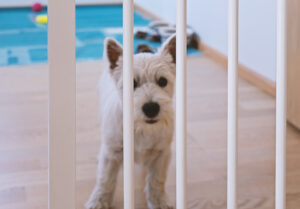
In September 2022, the worker, employed by a local council, was authorised to work from home. She had sent a message to her team leader via Microsoft Teams seeking approval to work from home on that day, as she was looking after a colleague’s dog. To prevent the visiting puppy from interacting with her pet rabbit, she erected a 60cm high metal pet fence across the doorway of her sunroom, which served as her home office.
Mid-morning, she decided to take a coffee break—a practice encouraged by her employer, who had guidelines promoting regular breaks and self-care during work hours. As she attempted to step over the pet fence to reach the kitchen, she caught her foot and fell. The fall resulted in injuries to her right shoulder and right knee. Although she hadn’t discussed erecting the pet fence with her employer and agreed that there were no such fences at the council offices, the incident occurred during an authorised break in her workday.
When Does an Injury Arise from Employment?
Under the Return to Work Act 2014 (SA), an injury is considered to arise from employment if it occurs out of or in the course of employment and the employment was a significant contributing cause of the injury. The key considerations are whether the injury happened during work activities or authorised breaks and whether the employment significantly contributed to the injury.
In this case, the Tribunal examined whether the worker’s injuries met these criteria. It noted that her home was her place of employment on the day of the accident and that taking a coffee break was an authorised activity encouraged by her employer. The Tribunal stated, “When considering whether [the] injury has arisen from employment, it is not only the particular circumstances surrounding the injury that is to be considered but the context, which includes an understanding of the contemporary conditions.”
The Tribunal also considered whether the employment was a significant contributing cause of the injury. The employer argued that because the pet fence was a self-created hazard, unknown to them, it should not be deemed an employment-related cause. However, the Tribunal found otherwise, stating, “The physical workplace hazard, being the pet fence, meets the second limb of s 7(2) of the RTW Act, being a significant contributing cause of her injuries.”
Furthermore, the Tribunal emphasised that the fact the worker created the hazard did not exclude the injury from being work-related. It stated, “In the context of a statutory compensation scheme not predicated on the notion of fault, the fact [the worker] created the workplace hazard the day prior, and unbeknown to the council, does not preclude a finding that it is an employment-related cause. This is particularly so, given the extent of [the worker’s] autonomy in managing her own health and safety while working from home.”
The Tribunal’s Decision: Employment as a Significant Contributing Cause
In a decisive ruling, the Tribunal found in favour of the worker. It acknowledged that, although the pet fence was a self-created hazard and not known to the employer, it was nevertheless a feature of her workplace on that day. The judgement affirmed that employment was a significant contributing cause of her injuries.
Additionally, the Tribunal was satisfied that she was engaged in an authorised work activity at the time of the accident. “While there is some evidence that [the worker] was also going to check on the puppy, I am satisfied on [her] evidence that she was taking an authorised paid coffee break,” the judgement affirmed.
Implications: Navigating Employer Responsibilities in Remote Work
This case underscores the evolving landscape of workplace safety in the era of remote employment. Employers face the challenge of ensuring safe work environments beyond the traditional office setting. The worker’s team leader had emphasised adherence to usual office protocols even when working from home. He noted that “once a staff member started their working day, usual office protocols should be adhered to. This included stretching for 10 minutes every hour and having a 30-minute break every 4 hours, usually away from a workstation.” He also noted that the council had a guide with practical tips on how to take care of yourself at work on its intranet.
As the Tribunal stated, “While working from home arrangements have benefits for both employers and workers, those benefits are accompanied by additional risks. A private residence of a worker may have unique risks not usually found in the employer’s workplace.”
The decision signals a need for employers to re-evaluate their remote work policies, taking into consideration the unique hazards present in employees’ homes. It highlights the importance of clear communication, comprehensive risk assessments, and shared responsibility in mitigating risks associated with working from home.
Any worker who has suffered an injury but is uncertain as to whether they are entitled to workers compensation can arrange a free telephone consultation with an experienced workers compensation lawyer at Websters Lawyers by calling 8231 1363.
Lauren Vercoe v Local Government Association Workers Compensation Scheme 2024] SAET 91
https://www.austlii.edu.au/cgi-bin/viewdoc/au/cases/sa/SAET/2024/91.html