

A Perfect Legal Storm
August 17, 2026
Can you sue someone other than your employer after a workplace injury?
Most people assume that if they are injured at work, their only legal remedy is a workers’ compensation claim against their employer.
That assumption is not always correct.
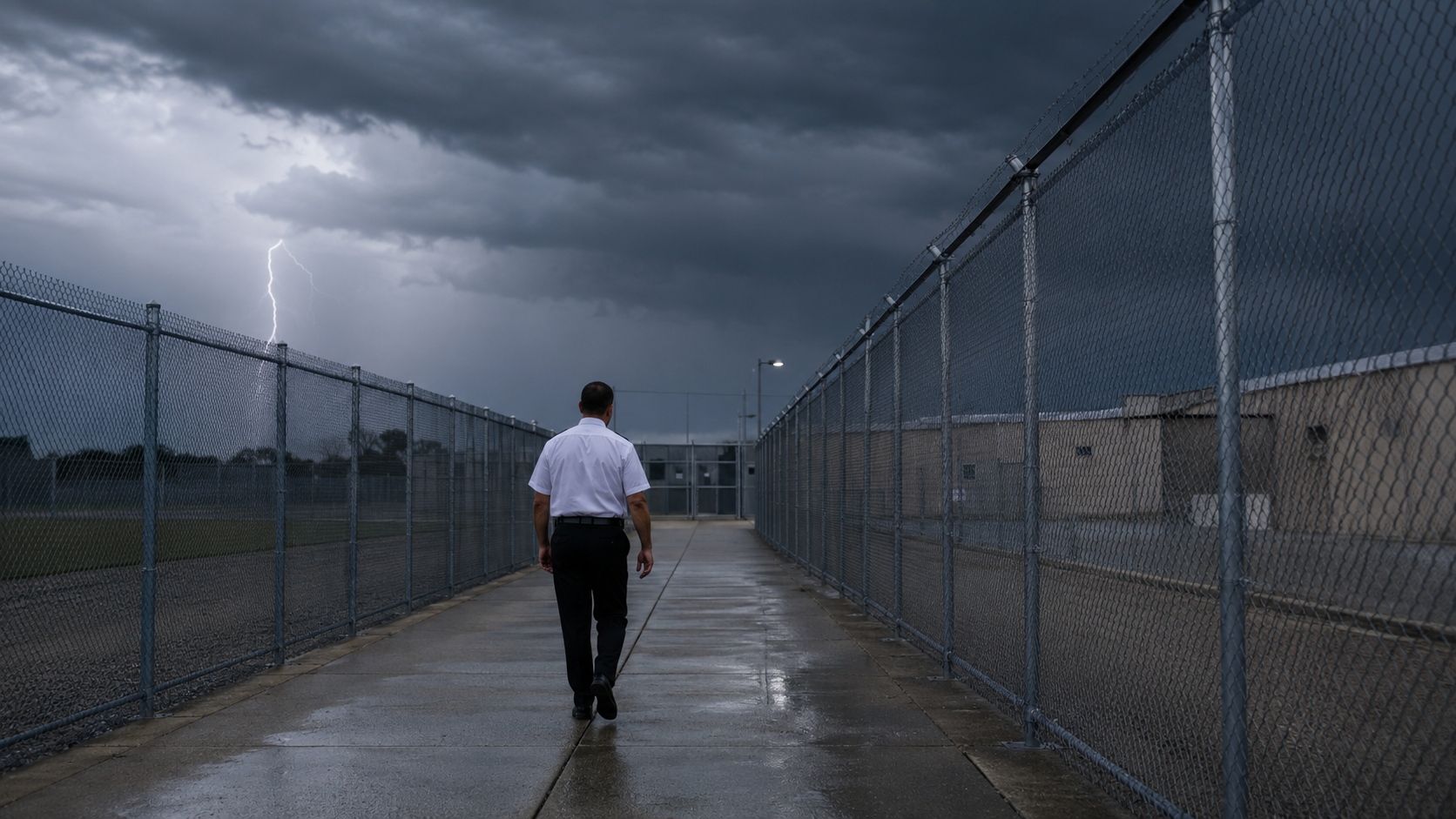
This is demonstrated in a recent decision of the District Court of South Australia. The case concerned a security guard at a detention centre who developed severe post-traumatic stress disorder (PTSD) after becoming trapped in an enclosed area of about four metres wide between electrified fences with no structures in the zone where shelter could be taken. Despite repeated requests to leave, he did not receive an affirmative response from the detention centre. For forty minutes, as the lightning continued, he became convinced he was going to die.
He survived, but the psychological toll was severe enough that he has not been able to return to work since. The Court found that the company responsible for running the detention centre had breached its duty of care to him, and awarded him substantial damages.
Here’s the detail that makes this case worth knowing about, whatever your job happens to be: the guard didn’t work for the company the Court found liable. He was employed by a separate security firm, which supplied guards to the detention centre under contract. The claim that succeeded was brought not against his employer, but against the operator of the centre itself, an entirely different business that controlled the site, gave the instructions, and held the keys.
Why Was the Claim Brought Against the Site Operator, Not the Employer?
The guard had, in fact, already made a number of claims under the workers’ compensation legislation in South Australia and the Northern Territory against his employer, the security firm, as well as the site operator, and those claims were settled.
This Court case was about something separate: a claim in negligence against a completely different organisation, one that had never employed him at all.
This is the principle worth remembering. Workers’ compensation exists because you have an employer, and your employer owes you certain protections simply by virtue of that relationship.
But injuries at work are very often caused, or made worse, by the conduct of people who aren’t your employer. A site owner. A head contractor. The business that controls the premises you’re working on, sets the rules you have to follow, and decides what you’re allowed to do and when. Where that other party has created or controlled the dangerous situation, the law may allow an entirely separate claim against them, alongside or instead of the workers’ compensation claim against your employer.
In this case, the court found that although the guard’s paycheque came from the security firm, it was the detention centre operator who told him where to patrol, who was responsible for issuing (or not issuing) the keys that would have let him leave, and who refused his repeated requests to be released once the storm hit. That degree of control was enough to establish that the operator owed him its own, independent duty of care, separate from anything owed by his actual employer.
Does This Apply to Labour Hire Workers and Contractors Too?
This arrangement – being employed by one business but actually working under the direction and control of another – is far more common than people realise. It is the daily reality for labour hire workers, for contractors and subcontractors on building sites, for cleaners and maintenance staff who work at a client’s premises rather than their employer’s, for agency staff placed in hospitals, warehouses, and factories, and for countless others whose paycheques and their day-to-day boss are two different entities.
If you are injured in one of these arrangements, the question of who was actually in control of the situation that hurt you is not just a legal technicality. It can determine whether you have a claim beyond workers’ compensation, and against whom. A worker who falls from scaffolding on a construction site, for instance, might have a workers’ compensation claim against their labour hire employer, but the scaffolding itself, and the site safety, was the responsibility of the builder in charge of the job. That builder may owe its own duty of care, entirely separate from the employment relationship.
The lesson is not that every workplace injury opens the door to a second claim. It is that the question is always worth asking, and it’s a question that’s easy to overlook if you assume workers’ compensation is automatically the end of the road.
Can You Claim Compensation for a Psychological Injury at Work?
Yes. The guard suffered no physical harm from the lightning storm itself; his injury was entirely psychiatric, caused by believing, for forty terrifying minutes, that he was trapped and about to die.
The court had to deal with a question that comes up in many psychological injury cases: was it reasonably foreseeable that someone in the guard’s position might develop a genuine psychiatric illness, as opposed to simply feeling frightened or shaken up? The court concluded that it was – A guard stationed in an enclosed area with no means of leaving and no shelter available, during a severe storm, was in a situation where a real psychiatric injury was a foreseeable outcome, not a far-fetched one.
This matters because psychological injuries are sometimes treated, wrongly, as somehow less legitimate than a broken bone or a torn ligament. The law does not draw that distinction. Where a psychological injury is caused by another person’s failure to take reasonable care, whether that person is an employer or another party responsible for the workplace, it can give rise to a claim in the same way as a physical injury. Workers who develop anxiety, depression, or PTSD because of what happened to them at work are not necessarily limited to whatever their workers’ compensation scheme provides for psychological injury. A separate common law claim may be available, and in appropriate cases, may result in a considerably more complete recovery.
Can You Get Workers’ compensation and Sue Separately for the Same Injury?
Yes, and this case is a clear illustration of it happening in practice. The guard had previously received workers’ compensation payments arising from claims involving his employer at the Darwin detention centre and a subsequent period of employment with Serco in South Australia. He separately pursued, and succeeded in, a common-law negligence claim against Serco in its capacity as the operator of the Darwin detention centre.
The point for now is simply that receiving a workers’ compensation payment does not automatically close the door on a further claim against another party. In fact, in a case like this, the two systems can therefore operate alongside each other, although workers’ compensation payments may have to be repaid or otherwise accounted for when damages are recovered from another party.
What Should You Do If You Think Someone Else Was Responsible?
If you have been injured while working under someone else’s direction, whether you’re a labour hire employee, a subcontractor, an agency worker, or simply an employee regularly sent to work on another company’s premises, don’t assume that a workers’ compensation claim against your employer is the only option available to you. The identity of the business that actually controlled the situation you were placed in matters. If that business created the danger, ignored warning signs, or refused reasonable requests to remove you from harm, it may owe you a duty of care in its own right, regardless of who signs your pay slip.
It’s also worth remembering that, again, the right to bring a claim is not limited to physical injuries. Psychological harm caused by dangerous or poorly managed working conditions is treated no differently by the law, provided it can be shown that a real diagnosable condition, not just distress, was a foreseeable consequence.
If you’ve been injured at work and you’re not sure whether your immediate employer was the only party responsible for what happened to you, it’s worth having someone take a proper look at exactly who was in control of your working conditions on the day. That question, more than any other, often determines whether there’s more to your case than a workers’ compensation file number.
In short: workers’ compensation is a claim against your employer, but it isn’t the only claim available. Where another business, such as a site owner, head contractor, or labour hire host, controlled the conditions that caused your injury, whether physical or psychological, you may have a separate common law negligence claim against that business as well.
Websters Lawyers acts for injured workers across South Australia in both workers’ compensation and common law negligence claims. If you’ve been injured at work and want to understand your options, get in touch with our team at law@websterslawyers.com.au or call us on 8231 1363 to arrange a free initial telephone consultation.
Robert Iapadre v Serco Australia Pty Limited [2026] SADC 86 (21 July 2026)