

More Families Come Forward About Yorke Peninsula Teacher’s Predatory Behaviour
January 20, 2025
As more survivors of abuse by a Yorke Peninsula school teacher come forward, there is growing support for the families affected by the predator involved. The case of Thomas Robert Ackland, a former Kadina Memorial School teacher, has left a trail of devastation in its wake, with victims and their families grappling with the long-term impact of his predatory actions. The revelations of systemic failures within the school and the Department of Education have sparked outrage and a call for accountability, as survivors pursue justice and demand changes to protect future generations.
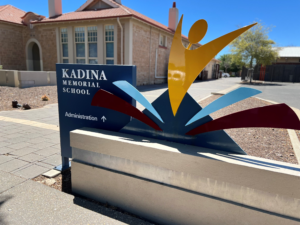
Ackland, who worked as an English and Humanities teacher for eight years, used his position of trust and authority to groom and abuse multiple students over a period spanning from 2017 to 2021. His actions have left a lasting impact on his victims, their families, and the broader community.
History of the Case
Ackland’s predatory behaviour began with seemingly innocuous interactions on the social media platform Snapchat. He added students to the app, issued them a set of rules, and initially engaged in casual conversations. Over time, these interactions escalated to inappropriate personal discussions, shirtless photos, sexually explicit messages, and demands for similar responses from his victims. Ackland’s victims were boys aged between 12 and 18, many of whom were students at Kadina Memorial School.
Despite multiple warnings and opportunities to cease his behaviour, Ackland continued his offending. In 2018, a staff member at the school confronted him about his use of social media to communicate with students. In 2020, a Crime Stoppers report was made regarding his inappropriate conduct, prompting police to speak with both Ackland and the school. In early 2021, two students confronted him directly about his behaviour. However, Ackland persisted in his actions, continuing to groom and abuse students until his arrest in March 2021.
Sentencing
In December 2023, Ackland pleaded guilty to 13 counts of aggravated communicating with a child with the intention of making that child amenable to sexual activity and one count of child sexual abuse. He was sentenced in the District Court of South Australia to 14 years in prison, with a non-parole period of 11 years, two months, and 12 days. The sentence was backdated to October 18, 2023, when Ackland was remanded in custody.
During sentencing, Judge Paul Muscat made scathing remarks about Ackland’s conduct. He described Ackland’s apology as “hollow” and an “insincere insult” to his victims. The judge rejected Ackland’s claim that his actions were the result of “stupidity,” instead labelling them as “sinister” and indicative of a strong sexual interest in adolescent males. Judge Muscat emphasised that Ackland had betrayed the trust placed in him by the school, the students, and their families. He also criticised the school for failing to act decisively despite being aware of Ackland’s inappropriate behaviour.
Civil Claims Against the SA Government
In the wake of Ackland’s conviction, several survivors have come forward to pursue civil claims for damages against the South Australian Government. These claims allege that the government, as the operator of Kadina Memorial School, was negligent in its duty to protect students from harm.
One former student, referred to as “Dennis,” has filed a $500,000 lawsuit against the state government. Dennis, for whom Websters Lawyers are acting, alleges that the school was aware of Ackland’s inappropriate conduct as early as April or May 2018 but failed to take adequate action to prevent further abuse. He claims that this inaction left him vulnerable to being groomed and abused by Ackland from 2019 to 2021. Dennis has spoken publicly about his experience, stating that the Department of Education failed in its duty to protect students and must be held accountable.
Legal Basis for Claims Against the State Government
Under Australian law, public schools are operated by State Governments, which are responsible for ensuring the safety and welfare of students. Claims against the state government in cases like this are typically based on two legal principles:
- Negligence: The plaintiffs allege that the school and its governing body (the Department of Education) failed to take reasonable steps to prevent foreseeable harm. In this case, it is argued that the school was aware of Ackland’s inappropriate behaviour but did not act decisively to remove him from his position or prevent further contact with students.
- Vicarious Liability: This principle holds employers (in this case, the state government) liable for the wrongful acts of their employees if those acts are committed in the course of their employment. While Ackland’s actions were criminal and outside the scope of his professional duties, courts have recognised that institutions can still be held vicariously liable if there is a sufficient connection between the employment and the wrongful conduct.
The survivors’ claims highlight systemic failures within the school and the Department of Education. They argue that adequate safeguards were not in place to protect students from abuse and that warnings about Ackland’s behaviour were not acted upon appropriately.
Conclusion
The case of Thomas Ackland underscores the devastating impact of abuse perpetrated by individuals in positions of trust. While Ackland is now serving a lengthy prison sentence, the survivors continue to grapple with the long-term effects of his actions. Their pursuit of civil claims against the South Australian Government serves as a reminder of the importance of accountability and the need for institutions to prioritise the safety and wellbeing of those in their care. These claims also aim to ensure that systemic changes are implemented to prevent similar tragedies in the future.
Although Ackland was sentenced for conduct involving 14 students, there are potentially many others against whom he offended. Even if their cases weren’t part of the criminal proceedings, that does not prevent them from commencing a civil claim for damages if they were subject to Ackland’s behaviour and we encourage those survivors to come forward.